Project
Vertie
An AI-powered audit and governance platform connecting code, architecture and risk to engineering decisions.
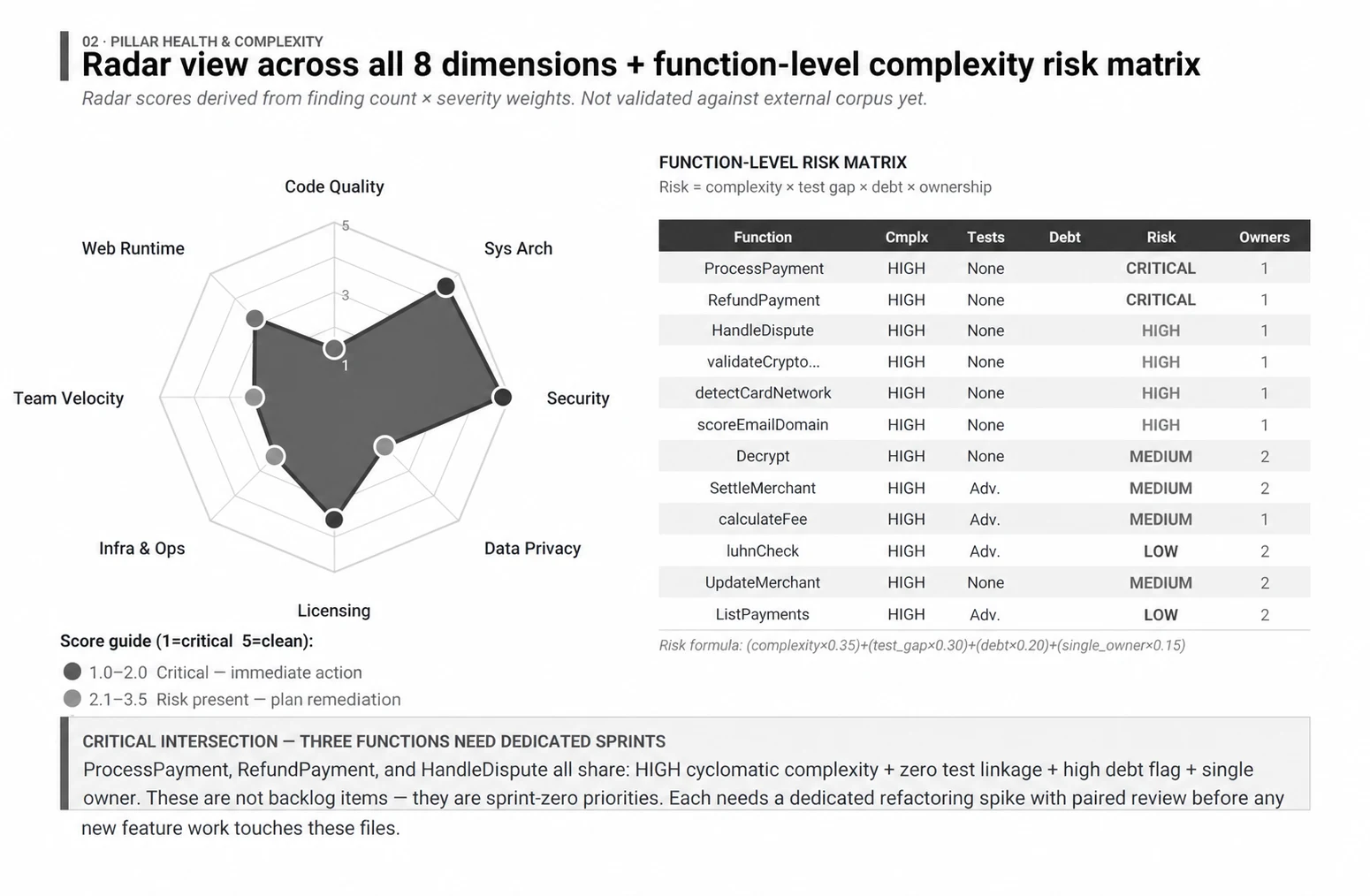
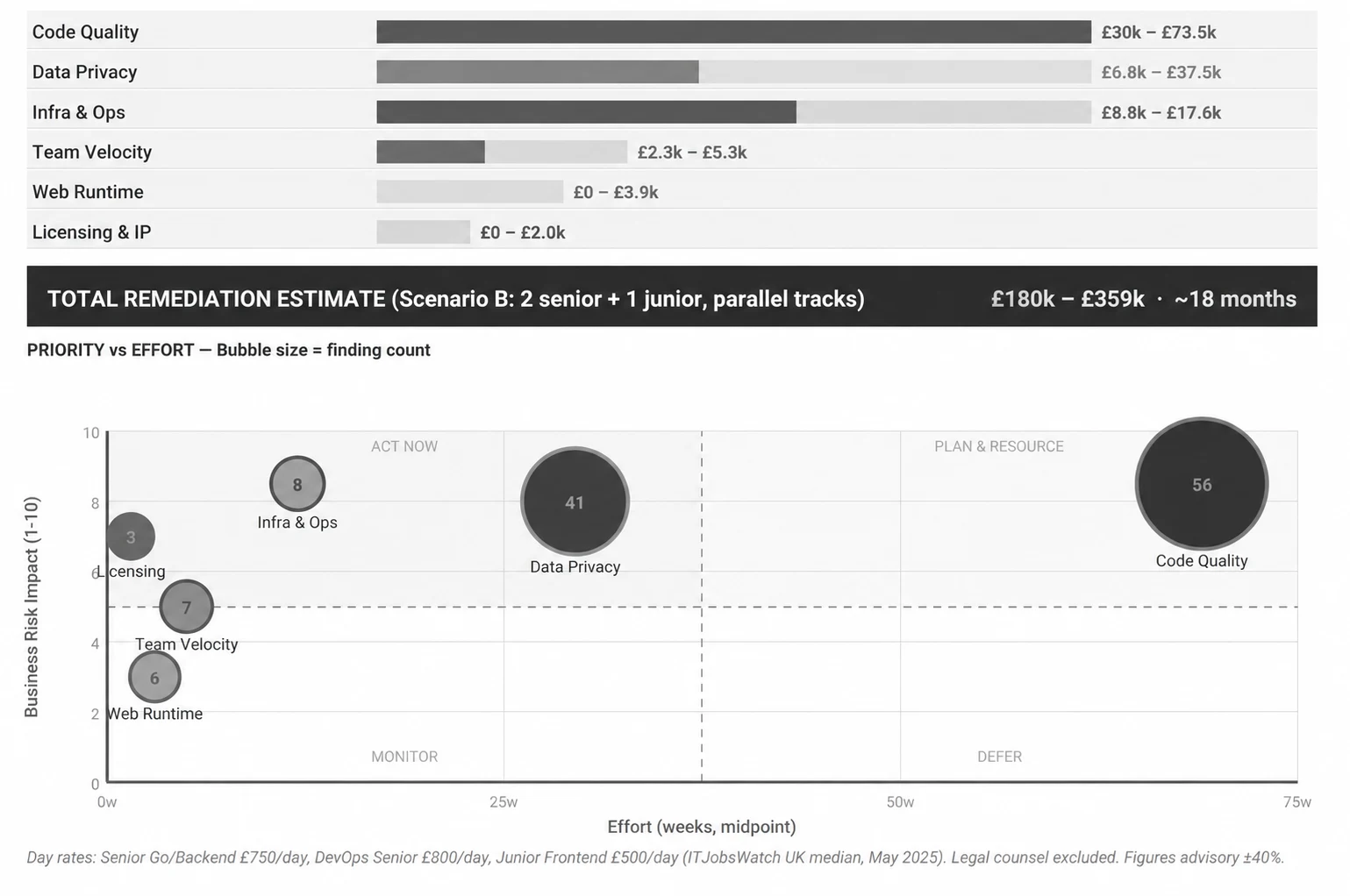
Vertie audits a software product’s codebase, architecture, dependencies and ownership. It connects technical findings to product health, change impact and the work needed to address risks.
From repository maps to product audits
I started Vertie in January 2026 to help people understand repositories built with AI assistance. The first MVP visualised a repository as an enriched graph. Feedback from potential users led me to develop it into an audit and governance platform, with findings and reports to support engineering decisions, software audits and valuations.
I built the initial product as its sole engineer. Its analysis spans 12 programming languages and 17 frameworks, connecting technical findings to delivery risk and investment priorities.
Architecture for AI-assisted development
I separated frontend, backend, backoffice, infrastructure and extensions by discipline, keeping the work manageable within an AI coder’s context. I chose that structure over an early split into microservices.
Within the backend, parsers, analysis pipelines, AI agents and integrations are decoupled modules. That lets me change or extend parts of the analysis without redesigning the whole product.
Checks from the start
I established CI/CD, UI and product tests, and unit, integration and evaluation harnesses from the beginning. Alongside spec-driven development, these provide a foundation for AI-assisted implementation, long-term maintenance and future engineer onboarding.